GTM Stories
When GTM Strategy Stops Working — and What High-Performing Teams Do Instead
Go-to-market strategies rarely fail because teams lack effort, resources, or intent. Most GTM breakdowns happen much earlier and much quieter—when teams mistake activity for understanding. Dashboards are full, pipelines are moving, and internal alignment appears strong. Yet results feel inconsistent. Some deals accelerate unexpectedly, others stall without explanation, and messaging updates don’t always translate into momentum.
This GTM story explores a recurring pattern observed across growing organizations: GTM strategy doesn’t collapse in the market first. It collapses internally—when teams lose sight of how buyers are actually thinking, evaluating, and deciding.
The Situation: When Activity Masks Reality
From the outside, everything looks functional. Campaigns are running on schedule. Sales teams are executing their playbooks. Discovery calls are happening daily. CRM stages progress, forecasts are updated, and leadership reviews performance through familiar metrics.
Despite this, uncertainty lingers. Win rates fluctuate. Deals linger longer than expected. Objections feel repetitive, but their root causes remain unclear. Teams respond by refining messaging, adding enablement content, or adjusting targeting—yet the improvements feel incremental at best.
What becomes evident over time is a gap between visibility and understanding. The team can see what is happening, but they don’t fully understand why buyers behave the way they do. Surface-level GTM signals offer motion, but not meaning.
The Turning Point: Listening Beyond the Dashboard
The shift begins when teams stop treating customer conversations as supporting evidence and start treating them as a primary source of GTM intelligence.
Sales calls, interviews, and ongoing customer conversations are no longer reviewed selectively or anecdotally. Instead, they are examined systematically, looking for repeated patterns rather than memorable moments. The focus moves from individual quotes to consistent behavioral signals across multiple interactions.
Buyer intent reveals itself subtly. It appears in how often certain questions are asked, in the way buyers describe internal blockers, and in how urgency evolves—or fails to evolve—over time. Tone changes, hesitation markers, and framing shifts begin to tell a story that dashboards never surface.
Once these conversational patterns become visible, GTM decisions feel less reactive. Teams begin responding to real buyer signals instead of assumptions.
What Most GTM Teams Get Wrong
Many teams believe they are customer-centric because they collect feedback. In practice, feedback without structure often becomes noise.
Individual anecdotes disproportionately influence strategy, while quieter but consistent patterns go unnoticed. Over time, GTM narratives are shaped by the loudest voices in the room rather than the most reliable signals in the data.
Another common breakdown occurs when insights remain fragmented. Research insights live in reports. Sales insights live in calls. Product insights live elsewhere. Without a shared layer connecting these signals, teams optimize in silos. Buyers experience this fragmentation as inconsistent messaging, unclear positioning, and misaligned expectations.
The result is alignment theater—teams appear aligned internally while buyers feel the disconnect externally.
The GTM Lesson: Strategy Comes From Behavioral Patterns
High-performing GTM teams don’t listen more frequently; they listen more deliberately.
They track how curiosity deepens into evaluation, where hesitation repeatedly appears, and which objections signal real risk versus surface resistance. They notice when language shifts from “I” to “we,” indicating internal alignment, and when urgency becomes concrete rather than abstract.
These behavioral patterns create strategic clarity. Messaging improves because it reflects how buyers actually speak. Positioning strengthens because it aligns with real decision drivers. Enablement becomes more effective because it addresses friction before it stalls deals.
GTM strategy evolves from a static plan into a living system, shaped continuously by buyer behavior.
Why This Matters Now
Modern buying processes are increasingly complex and committee-driven. Decisions involve multiple stakeholders, longer cycles, and higher scrutiny. In this environment, surface-level engagement signals are no longer sufficient.
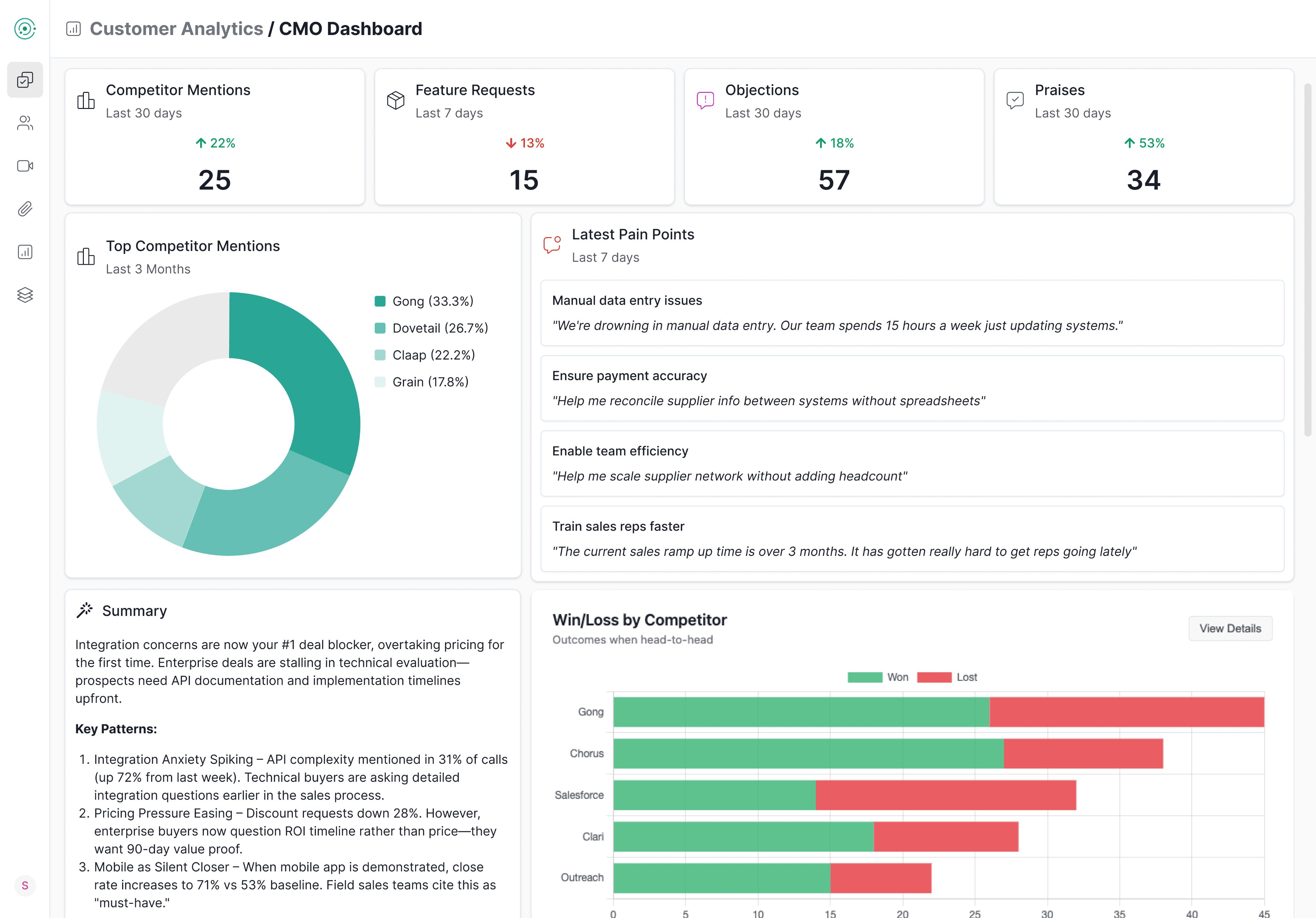
AI has made it possible to surface behavioral patterns across hundreds of conversations at scale. What once required intuition and manual effort can now be analyzed systematically. Teams gain insight into buyer psychology, internal alignment, and momentum—not just activity.
This shift enables GTM teams to move faster with confidence, grounded in evidence rather than assumption.
Final Thoughts
Every GTM strategy eventually reaches a point where execution alone stops delivering results. The teams that break through are those willing to pause, listen deeply, and rebuild strategy around behavioral truth.
This is the difference between running GTM motions and understanding what truly drives them.
More GTM Stories coming soon.